Author: Waverly Davis

7 Actionable Principles Stories Feat. Creciendo Juntos

CNE’s 7AP in Action series showcases members who exemplify excellence in nonprofit work and embody one or more of CNE’s 7 Actionable Principles (7AP)—guiding values that support a strong, sustainable social sector: 

Create strategic budgets 

Manage financial position 

Build relationships 

Prioritize equity 

Develop leaders 

Collaborate with communities 

Evaluate impact

This issue features Paola Sánchez Valdez, Interim Executive Director at Creciendo Juntos. Her leadership reflects a strong commitment to the 4th and 5th principles—prioritize equity and develop leaders. 

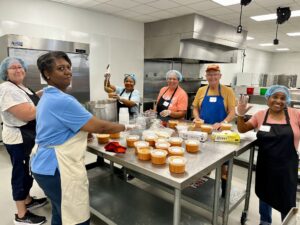
In the heart of Charlottesville, Creciendo Juntos (CJ) has been a vital part of the Latinx community for nearly two decades. What began in the mid-2000s as a small initiative focused on helping service providers better engage with the Latinx population has grown into a resilient nonprofit, now entirely focused on building Latinx youth power. 


CJ’s journey is one of evolution, community-rooted resilience, and courageous transformation. In 2015, the initiative officially became a nonprofit, and by December 2024, CJ had refined its mission with bold clarity: to build Latinx youth power in the Charlottesville region. This mission now drives their work across three key areas—transformational education, civic engagement, and collective belonging. Through these channels, CJ is empowering youth to show up authentically, embrace their identities, and become the leaders their communities need. But the road to that clarity wasn’t easy. 


After weathering the upheaval of the pandemic and a period of major transition, CJ was at a crossroads. With limited institutional knowledge from such a big organization shift, the new leadership asked the hard questions: Should we continue? Does the community still need CJ? 


That self-reflection sparked a transformative rebirth. At the center of this transformation was intentional board development and leadership cultivation, a process that was strengthened and supported significantly by CNE. 


Principle 4: Prioritize Equity 

CJ regularly shares CNE’s one-off workshops with board members, ensuring that leadership development is ongoing and inclusive. With a board composed of youth organizers, parents, educators, and community members, CJ has prioritized equity, building trust, and creating an environment where every board member feels welcome and supported. 


One of the most profound practices introduced during this time was a values exercise led by CJ’s Interim Executive Director, Paola Sánchez Valdez. Before diving into strategic plans, they took time to understand each board member’s personal values. That groundwork cultivated empathy, built psychological safety, and prepared the team to face tough conversations with courage and care. It wasn’t just about keeping the nonprofit alive—it was about ensuring the organization truly served the community with integrity. 


Principle 5: Develop Leaders 

Enter Maria Rincon, CJ’s committed board chair, who joined in May of 2023. She was instrumental in rebuilding CJ’s foundation from the ground up. CJ leaned heavily into CNE’s offerings—especially Board Academy, Emerging Leaders Academy, and numerous skill-building workshops—to equip their board and leadership with the tools they needed. Their leadership team’s experience with these CNE programs was so meaningful that they encouraged multiple CJ board members to enroll as well. This year alone, five individuals from CJ attended Board Academy—a powerful signal of the organization’s investment in leadership and growth. 

Through CNE, CJ found not just technical training, but a network of support—a reminder that they were not rebuilding alone. CNE gave them the space and tools to ask, “What does our community need now?” and helped them realign their mission with that answer. 


Today, CJ is thriving. They’ve built strong relationships with local high schools and trusted educators, who help connect youth with their programs. They’re fostering a new generation of Latinx leaders—youth who are ready to advocate, organize, and lead with critical consciousness. And they’re doing so with a board that reflects the community they serve, backed by a structure that nurtures both passion and accountability. 


As CJ continues to grow, their story stands as a testament to what’s possible when an organization embraces reflection, centers community, and invests deeply in leadership at every level. CJ hasn’t just survived a season of transition—they’ve emerged stronger, clearer, and more connected than ever before.


7 Actionable Principles Stories Feat. Fauquier Community Child Care

CNE’s 7AP in Action series showcases members who exemplify excellence in nonprofit work and embody one or more of CNE’s 7 Actionable Principles (7AP)—guiding values that support a strong, sustainable social sector: 

  1. Create strategic budgets 

  1. Manage financial position 

  1. Build relationships 

  1. Prioritize equity 

  1. Develop leaders 

  1. Collaborate with communities 

  1. Evaluate impact

  2.  

This issue features Kyle Beck, Executive Director at Fauquier Community Child Care. His leadership reflects a strong commitment to 2nd principle—manage financial position. 


Since 1991, Fauquier Community Child Care (FCCC) has been a steady hand in Fauquier County, offering safe, reliable, and enriching care for children ages five to thirteen. From before and after school programs to full-day summer camps, the organization operates from 6:30 am to 6:30 pm, five days a week, across ten local elementary schools. But while their work is rooted in child care, their mission goes far deeper: to promote the development of the whole child by supporting whole families. 


“We’re not just a daycare,” says Executive Director Kyle Beck. “We’re a youth development organization. Our job is to ensure that families feel supported, connected, and equipped—whether that’s through care, community partnerships, or referrals to food and housing resources. We want to be that central hub families can count on.” 


Yet behind that stability is a deeply strategic approach to sustainability—one that prioritizes thoughtful financial stewardship over expansion for its own sake. Like many nonprofits, FCCC operates in a financially challenging sector, balancing quality programming with accessibility. That balance requires careful attention to revenue diversity, long-term planning, and the ability to adapt. 


Principle 2: Manage financial position 

“We’ve always said—if you don’t have the finances, you can’t help anyone,” Kyle explains. “So everything we do is with sustainability in mind.” From offering a sliding-scale tuition model to becoming a certified subsidy vendor, FCCC has consistently taken steps to ensure equitable access to care. But they’ve also resisted over-reliance on any one funding source. Instead, they’ve built an investment portfolio, pursued grant funding carefully, and taken a slow-and-steady approach to growth. 


“Sometimes in the nonprofit world, you stretch too thin because the mission tells you to say yes to everything,” Kyle says. “But our approach is to stop and ask: What’s the real need? Is there a partner who can help us meet it? What’s the long-term impact?” That kind of disciplined financial thinking isn’t always intuitive, especially in the fast-paced world of childcare. But FCCC has been able to build the internal capacity and leadership skills needed to navigate these decisions confidently. 


From the moment Kyle joined the leadership team, after 17 years with Fauquier Community Child Care, working his way up from volunteer to Executive Director, he turned to the Center for Nonprofit Excellence – Virginia for guidance. “I came in knowing childcare and for-profit business, but I needed to learn how to lead in the nonprofit world,” he says. “CNE became the place I went for training, support, and connection.” 


Through CNE, Kyle participated in fundraising workshops, board engagement seminars, and leadership circles. His board chair enrolled in board development training. The organization worked with CNE for resources while planning a board retreat and in evaluating the end of a strategic plan cycle. 


One of the most transformative aspects of the relationship, Kyle notes, is the way CNE fosters connection—not just to knowledge, but to people. “When we had donations we couldn’t use, like musical instruments, it was through a CNE connection that we found another nonprofit that could put them to use,” Kyle recalls. “Those kinds of relationships wouldn’t have happened otherwise.” Even seemingly small touches—like being able to call or email for trusted advice—have proved invaluable. “CNE has been like the hub,” Kyle says. “If we need anything nonprofit-related, that’s where we go.” 


FCCC is planning and positioning itself to continue serving as a support for others in the community. “We’re not a foundation,” Kyle says, “but we’re in a place where we can help. So we’re asking, ‘How do we help other nonprofits stay afloat, so they’re there for the families we all serve?’ That’s part of our mission, too.” FCCC has turned financial wellbeing into more than a strategy—it’s become a safeguard for their community’s future. 


7 Actionable Principles Stories Feat. Building Goodness Foundation

CNE’s 7AP in Action series showcases members who exemplify excellence in nonprofit work and embody one or more of CNE’s 7 Actionable Principles (7AP)—guiding values that support a strong, sustainable social sector:

Create strategic budgets

Manage financial position

Build relationships

Prioritize equity

Develop leaders

Collaborate with communities

Evaluate impact

This issue features Courtney Polk, Executive Director at Building Goodness Foundation. Her leadership reflects a strong commitment to the 6th principle—collaborate with communities.


In a world where the foundation of a safe, stable life often begins with the literal foundation of a home or a school, Building Goodness Foundation is quietly transforming lives—brick by brick, beam by beam. They are builders, yes—but more importantly, they are collaborators.


Principle 6: Collaborate with Communities

From rural Virginia to the highlands of Guatemala and the neighborhoods of Haiti, BGF supports nonprofits, small businesses, and low-income homeowners by doing what they do best: construction. But not just any construction—intentional, inclusive, community-rooted construction. Whether it’s creating safe office space for a counseling nonprofit, ensuring a local grandmother can stay warm through the winter, or building earthquake-resilient schools abroad, BGF shows up with purpose and humility.


Their approach? “With, not for.” BGF doesn’t swoop in to save the day. They partner. They listen. They ask what’s needed and how they can help. They stand shoulder-to-shoulder with local communities, offering their skills and sweat to bring others’ missions to life. The result? Safe, functional spaces where children can learn, where health services can be delivered with dignity, and where families can live and grow with stability.


Nearly 75% of BGF’s volunteers are tradespeople—architects, electricians, plumbers, masons—donating time and talent to lift others up. They repair roofs, install heat, and lend their expertise to those in need—all in the spirit of shared humanity.


But BGF doesn’t stop at volunteering. They hire locally, both at home and abroad. In Guatemala, they worked alongside a crew of 100 local builders last year alone. Here in Charlottesville, they’re supporting minority-owned businesses by paying fair wages and opening doors to future contracts through their highly visible projects.


Their local initiative, Cville Builds, born out of the pandemic’s travel restrictions, has grown into a core program, responding to inquiries from nonprofits, businesses, and individuals alike. It’s built on a rigorous yet accessible application process, guided by community advisors, and designed to put relationship and impact first.


Central to Building Goodness Foundation’s strength and resilience has been its long-standing relationship with the Center for Nonprofit Excellence – Virginia. CNE has provided BGF with the resources, learning opportunities, and peer connections essential to navigating growth, change, and challenge. From grant writing workshops to financial management training, board development to executive leadership circles, staff at every level, from volunteer coordinators to executive leadership, have participated in CNE’s offerings over the years. 


“Having a central partner such as CNE—one that’s really the heart of the nonprofit community in our town—allows everyone to have a hub,” BGF shared. “A place where everyone doing philanthropic and service work can go to hear a consistent voice, get the tools they need, and build real relationships.”


In today’s uncertain funding and political climate, that kind of support is more than helpful—it’s essential. As BGF navigates challenges abroad, particularly in Haiti, and shifting funding priorities at home, they’ve leaned on CNE for trusted information, policy updates, and strategic advice—all delivered with clarity and compassion.


BGF believes that collaboration, not competition, is the future. With limited resources and increasing need, the only path forward is together. Every safe space they help create is a product of partnership, not just between tradespeople and community members, but between organizations, cultures, and sectors. Whether working with nonprofits across town or across borders, BGF remains grounded in the belief that everyone has something to bring.


CNE Board Member Spotlight: Doug Walker

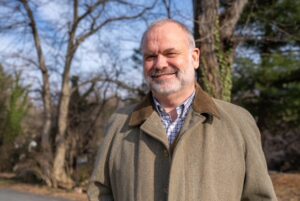
With over 30 years of experience as a local government manager across five Virginia jurisdictions, Doug Walker has had the privilege of working alongside dedicated public servants—both elected officials and appointed staff. Over the course of his career, he has led organizational performance efforts, aligning them with the vision of governing bodies and fostering strong, thriving communities. Today, he shares his expertise as a program instructor and team facilitator with the Virginia Institute of Government at UVA’s Weldon Cooper Center for Public Service and helps connect talented leaders with local governments through his executive recruitment work with The Berkley Group.

Having seen firsthand the vital role nonprofits play in delivering essential programs and services that strengthen communities, Doug is passionate about supporting organizations that foster collaboration between government and the nonprofit sector. He believes the most impactful partnerships go beyond funding—building intentional, dynamic connections that drive community well-being. Through his service on the CNE Board, he hopes to bring his local government experience to deepen these connections and advance CNE’s mission.

Thank you, Doug, for your outstanding support of CNE!

CNE Board Member Spotlight: John McCarthy

Meet John W. McCarthy of Warrenton, Virginia. John joined CNE’s Board of Directors in June 2025, and we’re thrilled to have his leadership and support.

John brings over 30 years of experience as a planner and County Administrator, along with 35 years in nonprofit governance. He has held leadership roles in organizations, including a local Mental Health Association, a nonprofit Pre-K program, the public library, and has chaired the local health system, community foundation, and the PATH Foundation.

John believes, “The nonprofit sector can accomplish great things—as can government and the business community—but when they work together, they can drive transformative improvements in a community’s vitality.” He sees CNE as a powerful resource that helps nonprofits achieve their missions and serve their communities more effectively.

Thank you, John, for your outstanding support of CNE!

A Critical Pause: What the Combined Federal Campaign Suspension Means for Nonprofits

Last week, we learned that the Presidential Administration issued a “stop work order” to pause the Combined Federal Campaign (CFC)—a move with potentially far-reaching consequences for nonprofit organizations nationwide.

For more than six decades, the CFC has provided federal employees, contractors, and retirees with a simple, reliable way to support charitable causes through payroll deductions. Since its creation in the 1960s, the program has raised nearly $9 billion for nonprofits. Just last year alone, it generated $66 million in charitable giving.

The timing of this suspension is especially concerning. The stop work order was issued just days before the 2025 campaign was scheduled to launch this September—after nonprofits had already invested millions of dollars in application fees and preparation costs. Many organizations were counting on these contributions to sustain programs and services in the year ahead.

In response, the National Council of Nonprofits (NCN) and United Way submitted a joint letter to the Administration urging leaders not to eliminate the CFC. Instead, they called for meaningful collaboration with stakeholders to build on the program’s long-standing legacy of success. This letter has also been shared with key members of Congress, and they are continuing to work alongside national partners to determine additional next steps.

At a time when communities rely on nonprofits more than ever, the suspension of the CFC threatens to disrupt critical funding streams that support health, education, human services, and countless other areas of community life. The nonprofit sector remains committed to advocating for a strong and stable CFC—one that continues to connect federal employees with the causes they care about most.

Budget Reconciliation and the Charitable Sector

Webinar Alert!

Join a webinar on the Budget Reconciliation and the Charitable Sector, tomorrow, May 29 from 2 – 3 pm. This session is being sponsored by the Council on Foundations, Independent Sector, National Council on Nonprofits, and the United Philanthropy Forum (UPF).  


Federal Legislative Update

On May 22, 2025, the U.S. House of Representatives narrowly passed the budget reconciliation bill (H.R. 1) by a 215–214 vote. While two provisions that would have significantly affected the nonprofit sector were ultimately excluded—one that would have allowed the IRS to revoke tax-exempt status from organizations labeled as “terrorist supporting organizations,” and another that would have treated income from licensing a nonprofit’s name or logo as Unrelated Business Taxable Income (UBIT)—several provisions with far-reaching local impact remain in the bill.


Key Provisions Affecting Grantmaking

The bill introduces a tiered excise tax on private foundation investment income, ranging from 1.39% for smaller foundations to 10% for those with over $5 billion in assets. It also imposes a 1% minimum floor on corporate charitable deductions, which could reduce philanthropic contributions overall.

In Virginia alone, the proposed increase in the excise tax is projected to reduce available charitable dollars by over $14 million. This translates to fewer resources for nonprofits working across sectors like education, health care, the arts, environmental protection, and social services.

On a more positive note, the bill temporarily reinstates a universal charitable deduction for non-itemizers: $150 for individuals and $300 for joint filers, applicable for tax years 2025 through 2028.


Medicaid Work Requirement and Coverage Concerns

The bill also includes stricter Medicaid work requirements, mandating that able-bodied adults work at least 80 hours per month to maintain coverage, beginning in late 2026. These changes could lead to widespread coverage losses, especially for low-income individuals facing barriers to steady employment.

Health and human service organizations are especially concerned about these provisions, which could shift greater responsibility onto nonprofits to address the gaps in coverage and care.


What’s Next

The bill now heads to the U.S. Senate, where changes are likely before any final vote. Nonprofits, funders, and community advocates should stay informed and engaged as the legislative process continues.

TAKE ACTION! House Advances Major Tax Bill Harming Nonprofits

Thank you to the National Council of Nonprofits (NCN) for the following news, updates, and resources.

The House of Representatives voted Thursday to approve the “One Big Beautiful Bill Act,” a major tax bill that Republicans hope to enact by summer. The bill now heads to the Senate, where several changes to the bill are expected. Read NCN’s updated analysis of the revised bill.

Nonprofit organizations should contact their members of Congress – especially Republicans – to urge them to protect the nonprofit sector in the tax bill.

Your advocacy works! Nonprofit organizations successfully advocated for congressional leaders to remove a provision that would have granted unprecedented authority to the Executive Branch to revoke nonprofit tax-exempt status without due process. There is more work to do. The current bill still includes several provisions that could significantly harm nonprofit organizations and the people they serve.

Sign a National Letter

Urge Congress to remove harmful provisions in the tax bill targeting nonprofit organizations. This national letter is led by National Council of Nonprofits, Council on Foundations, Independent Sector, and United Philanthropy Forum.

Sign On

Contact Your Members of Congress

Urge them to protect nonprofits and their ability to serve their communities in the tax package.

Use NCN’s Email Template


Additional Resources from NCN:


Updated Chart on Tax Provisions

Chart of implications of specific sections in the draft tax legislation including revoked items.

View the resource

Major Tax Package Heads to the Senate 

Analysis of the draft tax legislation and suggested actions for nonprofit advocates.

View the resource

Factsheet on Tax Reconciliation

Overview of how and why nonprofits should be protected in the tax reconciliation process.

View the resource

Unprecedented Cancellations of Federal Grants: What Nonprofits Should Do to Prepare and Respond

Monday, May 19 at 3:30 pm Eastern
Join the National Council of Nonprofits for a free webinar for nonprofits on responding to federal grant cancellations. The webinar will cover how grants are being cancelled, steps grantees should take to prepare for the risk of cancellation, and considerations for organizations after cancellation. The NCN Public Policy team will also share actions that you can take now to advocate for your nonprofit organizations.
The presentation will be provided by Amanda Fuchs Miller, President of Seventh Street Strategies. Amanda has more than three decades of experience working inside and outside of government. As President of Seventh Street Strategies, she works with nonprofit organizations, foundations, and higher education institutions to provide advocacy, policy, oversight, and communications support.
Please note that this session is not being recorded. Space is limited, so please do not register if you don’t anticipate being able to attend the live event.